

Carrington Farms agrees! That is why our mission is to Eat Better. Feel Better. Live Better.

Carrington Farms Blog
#FeelBetter #LiveBetter
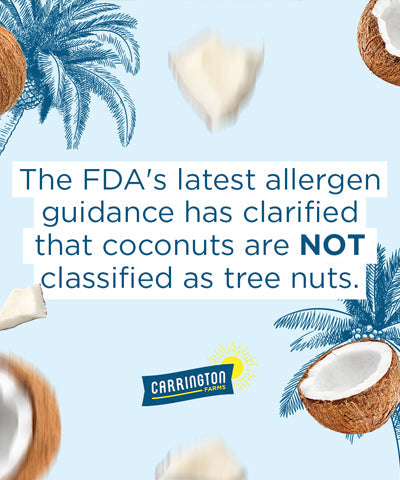
FDA's New Allergen Guidance
The FDA's latest allergen guidance has clarified that coconuts are NOT classified as tree nuts.

Delicious Smoothie Recipes for Men
See seven muscle-building smoothie recipes, six guidelines to building a healthy smoothie, and key ingredients to incorporate.

MCTs-What are they?
It seems that MCTs are all over the news, but what are they? Click this article to see the real deal.

Foods to Help You Sleep
#health_above_all_nutrition I don’t think I’ve met a client who has told me they get the sleep they need. The problem is, lack of sleep leads to a whole host of other issues, including heightened anxiety, weight gain, trouble focusing, weakened immunity, and higher risk for diabetes and hypertension. Instead of...

Holy Basil Seed Tea
Did you know when you put holy basil seeds in water (pictured), the soluble fiber outer layer soaks up the water and forms a plump, gel-like coating? People like using these soaked seeds in drinks and desserts because they bring a unique texture to the table. Try this simple recipe for Holy...

It's That Time Of Year Again
It’s that time of year again. New resolutions, new and healthier recipes, and a new gym membership. Your gym bag is packed and ready, your shopping list is filled with fruits and vegetables, and you are motivated to make this the year you achieve your health and fitness goals. If...

Vegan Holiday Eats!
Thinking about going vegan? If so, it requires a lot of planning and forethought. You need to make sure you know which foods will give you the protein, vitamins and minerals your body needs. Vegans can be at risk for some nutrient deficiencies, but not if they know what they are looking for....

25 Essential Oils That'll Give You the Best Skin of Your Life
Redbookmag.com featured Carrington Farms Coconut Oil in their article featuring a list of naturally derived essential oils for your skin. The second oil listed as “the best ones to look for on store shelves” is coconut oil, “the all-natural miracle hydrator for your face, body, lips, cuticles—anywhere you want to relieve...

Back to School Lunch Hacks!
Back to school means back to packing school lunches. Yup, I said it! If you're like me, those words sent a shudder down your spine. What's a busy mom to do? I’ll tell you what I do… I remember that “Pretty Colors Feel Very Soothing.” Okay, okay. Now you're scratching your head and...

2 Great Healthy Grilling Recipes
Flax Burger Prep time: ~15 mins Ingredients 1-pound thawed ground beef, lean ground turkey or bison, veal or your favorite meat. 2 tbsp finely chopped onion 1 clove garlic minced 2 tbsp Carrington Farms Organic Milled Flax Seed or 2 tbsp Carrington Farms Organic Flax Chia Blend 2 tbsp water 3/4...

The Benefits of Breakfast
Do you usually eat breakfast? The first meal of the day is often one that people skip for whatever reason. If you do, you're missing out, not only on delicious breakfast foods, but the health benefits that come with them. After sleeping all night, breakfast gets your day started. While your...

CBD - What you need to know
The CBD trend Whether you are an athlete, a teenager or an on-the-go parent, chances are you have heard of CBD - otherwise known as Cannabidiol. CBD can be found in stores, products and in the cultural center of America. Yet with a trend so widespread as CBD it is...

What's All The Buzz About MCT?
What’s All The Buzz About MCT? What’s the deal with MCT? It’s popping up everywhere. In bottles of oil on the supermarket shelves, in coffee, and even in MCT oil powder. But what exactly is it and what does it do? What is MCT? MCT stands for Medium Chain Triglyceride...

Best Grains & Seeds to Add to Your Diet
Seeds and whole grains are some of the natural whole foods that are great to add to your diet. Both are filled with fiber and other nutrients, so they help support the functioning of your body. Having minimally processed whole grains and seeds can provide a great boost to your...

What Are The Differences Between Butter and Ghee?
When you are in the kitchen and whipping up a certain recipe, you'll find many things that call for butter. You probably use butter in desserts, to roast certain vegetables, or to slather on your toast. However, there is an alternative: organic ghee. If you have only ever used butter,...
 Please check out our sister company,